
Many English learners confuse was and were. The difference is simple: it depends on the subject of the sentence. Below, you’ll find clear rules, examples, and exercises to help you use both correctly.
“The importance of this verb is that it is the foundation of communication in English. Mastering its use will then allow you to utilize other tools such as verbs.”

| Present Simple | Past Simple | I am in Wales. | I was in Wales. |
| It is raining. | It was raining. |
| They are quiet. | They were quiet. |
When do we use Was and Were?
While the verb "to be" has three forms in the present simple (am, is, are), it has two in the past simple: was and were.
“The difference between "was" and "were," or the use of the third-person singular form of any verb compared to other forms, can be tricky. It comes down to practicing conjugations, especially with irregular verbs like "to be" and "to do," and knowing when to use the third-person singular form.”

Was is used when:
Was corresponds to the first person singular, so it is used when the subject of your sentence is "I," and it also refers to the third person singular, that is, it is used when the subject is "he, she, or it."
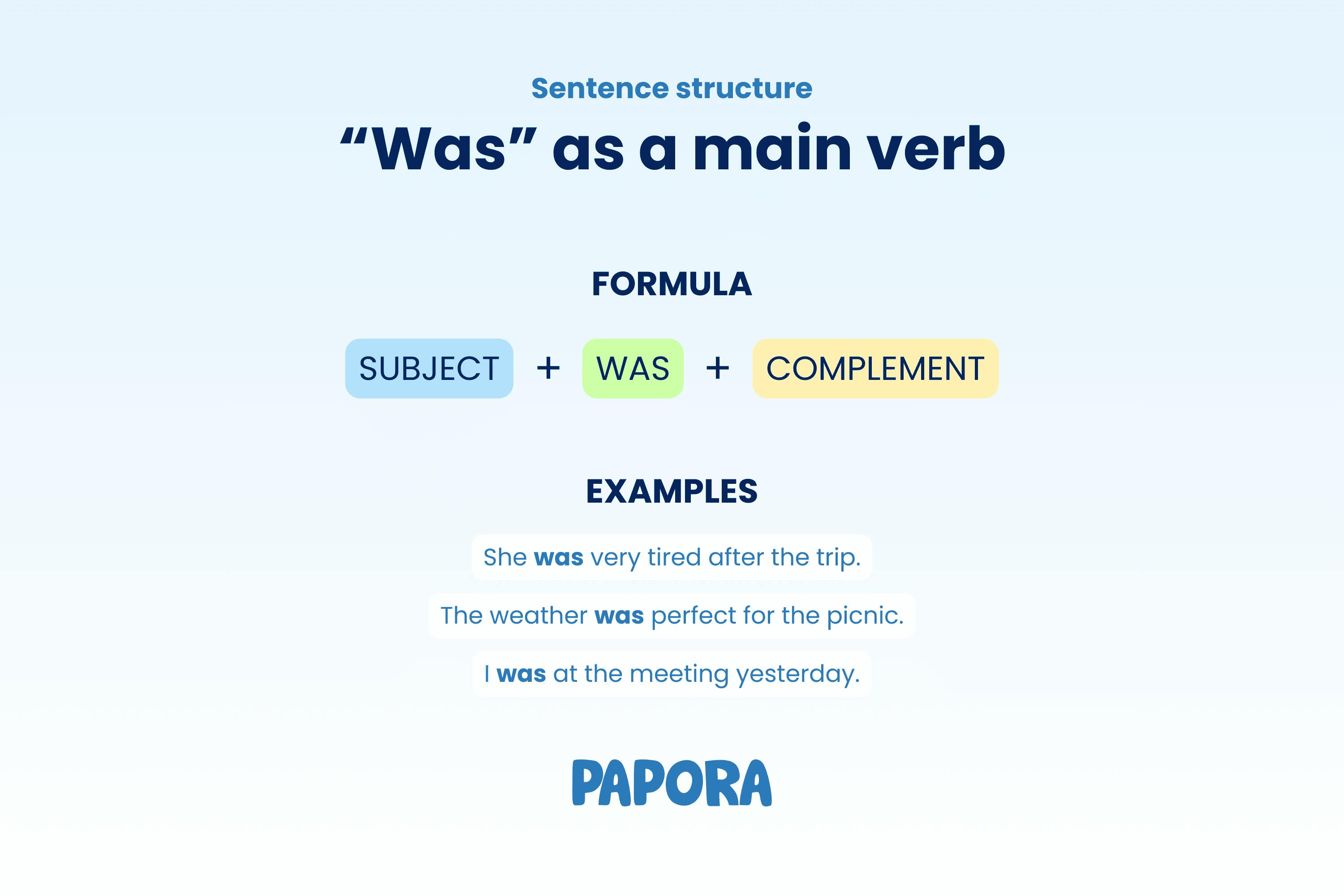
For example:
- I was at work.
- He was quite ill.
- She was in Scotland last week.
- It was a cool day.
In the case of the table shown above, the affirmative form of how was is used is represented; however, when it comes to negative sentences, the grammatical formula does not change as much:
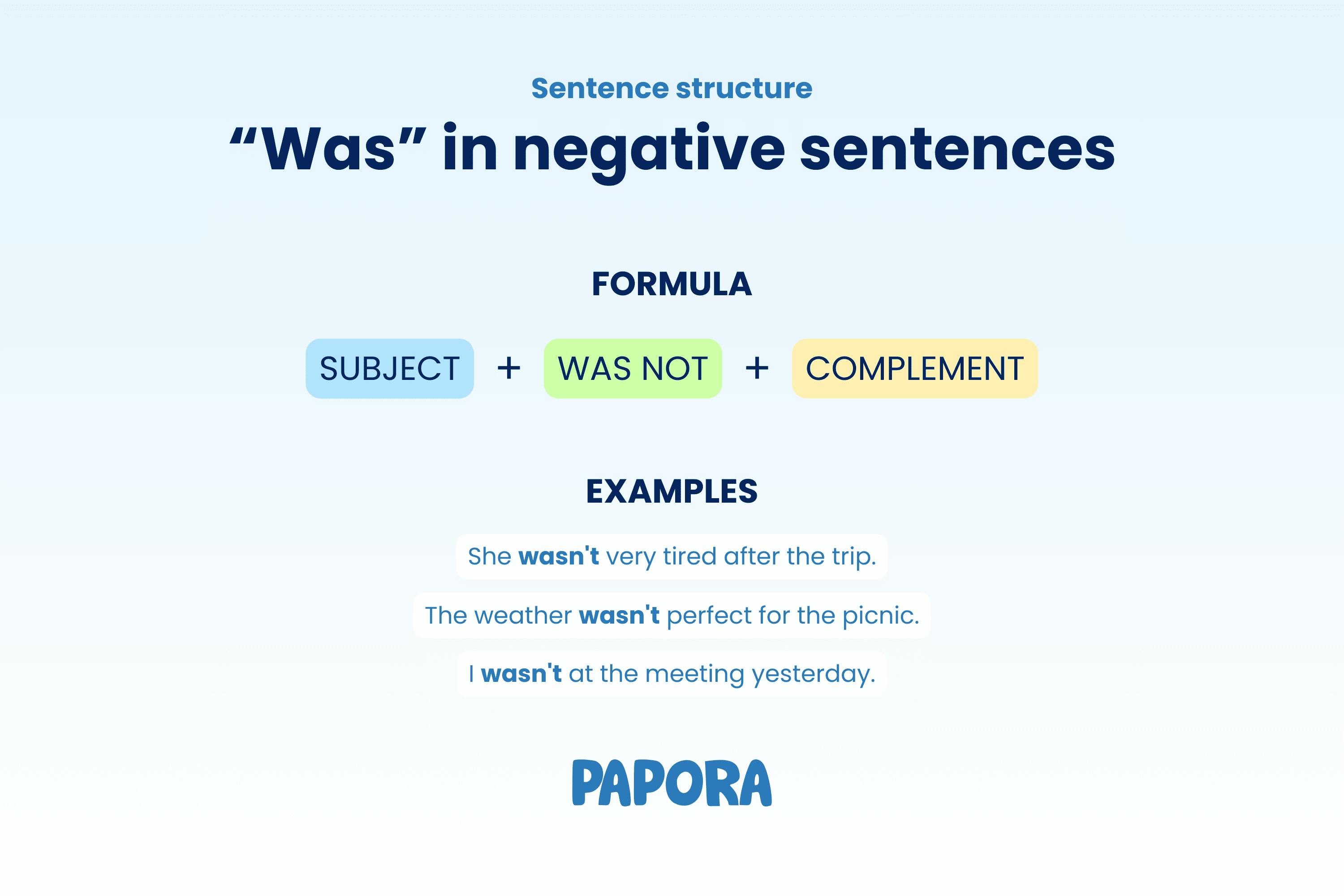
For example: He was not part of the group
Go beyond grammar rules and start speaking with confidence
Practice was, were, and more in real conversations with unlimited live classes and 500+ interactive lessons. Learn at your own pace, from A1 to C1, on the Papora platform.
Start practicing today


Were is "when" used:
Were is used with the pronouns you, we, they (second, first, and third person plural) and with you (second person singular). And like was, its meaning is "I was" or "I was." Its form is:
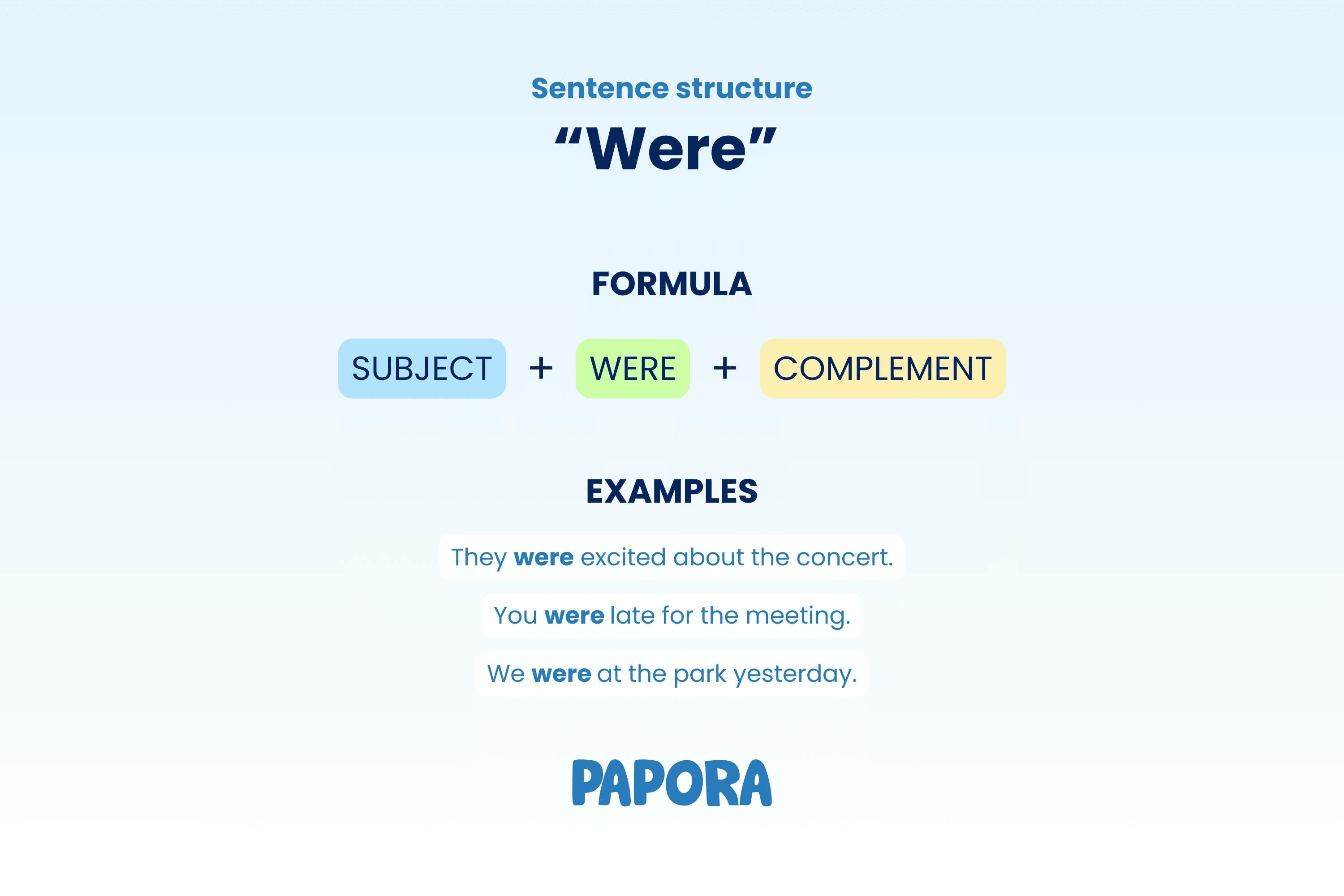
For examples:
- You were the best in the class.
- We were at the concert.
- They were invited to the party.
- You were the best of friends.
When we refer to negative sentences, it follows the same grammatical pattern as "was". Its formula is:
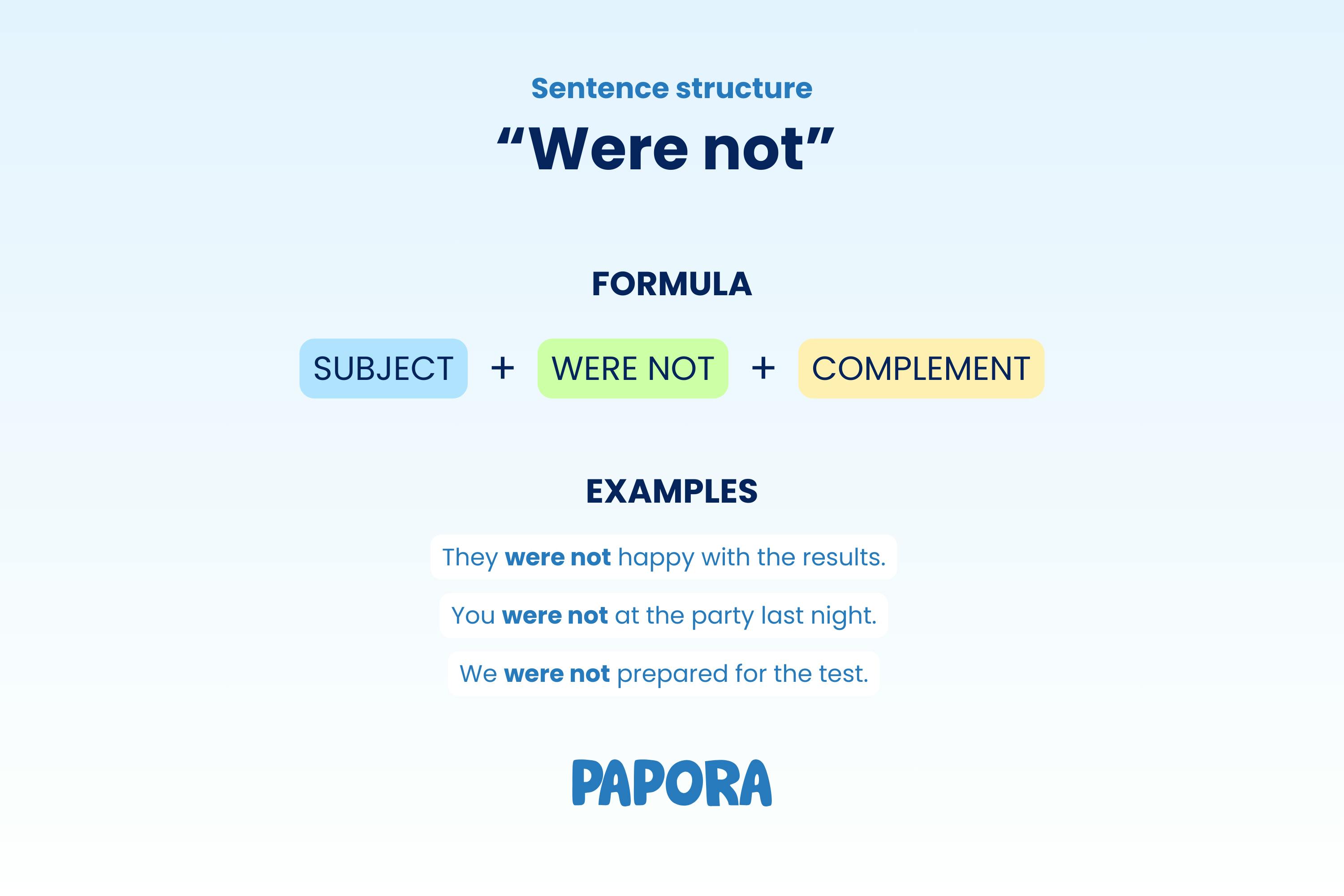
📌For example: They were not playing soccer.
Was and were do not contract with the pronoun.
As you can see, in the simple past tense, there is no contraction between the pronoun and the verb to be. Both was and were appear on their own.
For example:
- You were in English class.
- It was good.
- They were at home.
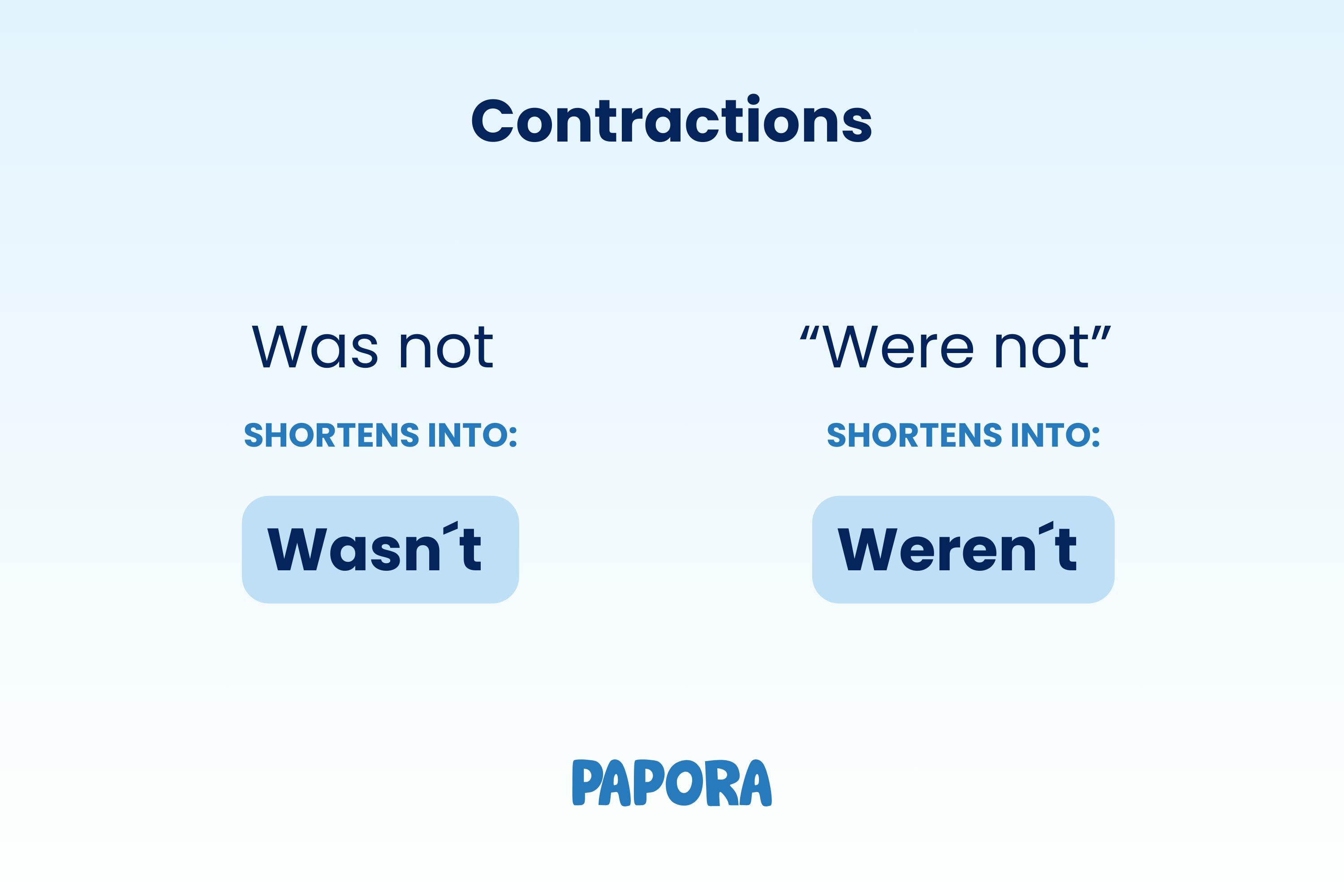
However, when the sentence is negative, the contraction is made between was and not and were and not:
For example:
I was not - I wasn’t
You were not - You weren’t
He was not - He wasn’t
She was not - She wasn’t
It was not - It wasn’t
We were not - We weren’t
You were not - You weren’t
They were not - They weren’t
Short answers with was and were
To ask a question, we change the word order. In short answers, we respond using was or were.
| Pregunta | Respuesta corta |
| Was I at home? | Yes, I was / No, I wasn’t |
| Were you at work? | Yes, you were / No, you weren’t |
| Was he Canadian? | Yes, he was / No, he wasn’t |
| Was she a doctor? | Yes, she was / No, she wasn’t |
| Was it sleeping? | Yes, it was / No, it wasn’t |
| Were we there? | Yes, we were / No, we weren’t |
| Were you ready? | Yes, you were / No, you weren’t |
| Were they studying? | Yes, they were / No, they weren’t |
Here are two examples of the past continuous tense in English, but it doesn't matter; if the verb "to be" is present, there's no need to use any other auxiliary verb (such as "to do").
Other verb tenses with was and were
Since they are the past tense of the verb to be, was and were function as auxiliary verbs. They are used for the simple past tense and, as we have just seen, also for the past continuous tense.
For example:
- I was sleeping.
- You were working.
- We were studying.
And any other structure that uses the verb "to be," such as "be going to" in the past tense:
- They were going to visit the museum.
- He wasn’t going to help us.
- When were you going to tell me?
Or there to be in the past:
- There was a dog in the street.
- There weren’t any cars.
- Were there many people?
Practical exercises on Was and Were
Practice makes perfect, which is why we created this section of the article for you.
“Although it might seem tedious, writing the different subjects plus "was" or "were" in a list can be really effective. After writing the list, practice reading "subject" and "was/were" aloud to familiarize yourself with the sounds as well.”

Based on the content we've shared, use it as a guide to answer these sentences.
Read each one and determine whether "was" or "were" is used in that sentence. You'll find the answers with the correct information at the end of the article.
- You ___ in the club last night.
- I ___ reading the bible.
- Marcos ___ playing with Pokémon cards.
- Cheryl ___ selling cupcakes last weekend.
- ___ they travelling by Europe?
- ___ the dog sleeping in your bedroom?
- I ___ at the party last night.
- You ___ doing your homework.
- She ___ a nurse, but now is studying to be a chef.
- They ___ early to enterprise meeting one week ago.
Answers:
- You were in the club last night.
- I was reading the bible.
- Marcos was playing with Pokémon cards.
- Cheryl was selling cupcakes last weekend.
- Were they travelling by Europe?
- Was the dog sleeping in your bedroom?
- I was not at the party last night.
- You were not doing your homework.
- She was a nurse, but now is studying to be a chef.
- They were early to enterprise meeting one week ago.
If you want to find out your level and start learning much more than just "was" and "were," you can take our Papora level test.
Would you like to learn English? Check out our article on the best English schools in Mexico.
Ready to practice beyond this lesson?
Keep improving your English with structured lessons and real conversation practice on the Papora platform.
Start learning today
Frequently Asked Questions about Was and Were
"Was" and "were" are the past tense forms of the verb "to be." The main difference lies in the grammatical person:
- "Was" is used with: I, he, she, it (singular). Example: I was tired / She was at home
- "Were" is used with: you, we, they (plural and "you" singular). Example: They were happy / You were right
Did is an auxiliary verb used in past simple questions and negatives. Was is the past form of the verb to be. You can practice both in real conversations with unlimited live classes on Papora.
Was or were express the simple past tense of a sentence, they mean "was" and are used depending on the subject pronoun of the sentence.