
Learning animals in English is part of the basic vocabulary every English learner should know. In this guide, you’ll find a list of common animal names in English with pronunciation and simple meanings.
To make them easier to remember, we organized them into categories like mammals, birds, aquatic animals, and insects.
And if you want to practice these words in real conversations, you can also train them with Papora’s interactive lessons and live classes.
Practice animal vocabulary in real English conversations
You’ve just learned several animals in English, but the best way to remember them is to use them in real conversations. With Papora, you practice speaking in small groups with native-level teachers while expanding your everyday vocabulary.
Practice these words in a live class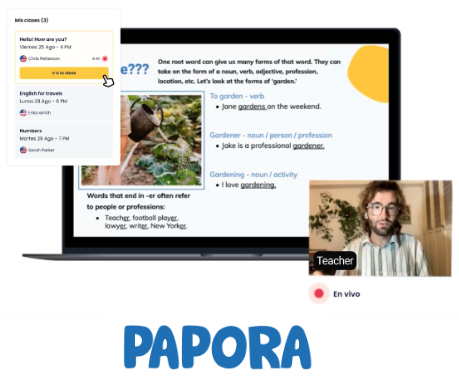


Classification of animals in English and their pronunciation
In this guide, you’ll learn the most common animals in English and how to pronounce them correctly.
To make them easier to remember, we organized the vocabulary by animal type - such as mammals, birds, aquatic animals, and insects - so you can learn them faster.
Mammals in English: Vocabulary with pronunciation

Mammals include some of the most common animals in English, especially everyday animals like pets and farm animals.
Learning these words will help you talk about familiar animals in daily conversations.
Here are some common mammals in English and how to pronounce them:
| ENGLISH | PRONUNCIATION | MEANING |
| bat | /bæt/ | A small flying mammal that is active at night. |
| bear | /ber/ | A large, strong mammal with thick fur that lives in forests. |
| buffalo | /ˈbʌfəloʊ/ | A large wild animal with horns that lives in herds. |
| bull | /bʊl/ | An adult male cow. |
| camel | /ˈkæməl/ | A desert animal with humps on its back that stores fat. |
| cat | /kæt/ | A small domestic animal that people often keep as a pet. |
| cheetah | /ˈtʃiːtə/ | A large wild cat known as the fastest land animal. |
| chimpanzee | /ˌtʃɪmpænˈziː/ | A very intelligent primate closely related to humans. |
| cow | /kaʊ/ | A farm animal raised for milk and meat. |
| deer | /dɪr/ | A graceful wild animal with long legs and antlers. |
| dog | /dɔːg/ | A loyal domestic animal commonly kept as a pet. |
| donkey | /ˈdɒŋki/ | A small animal similar to a horse, used for carrying loads. |
| elephant | /ˈelɪfənt/ | The largest land animal, known for its trunk and big ears. |
| fox | /fɒks/ | A small wild animal with red fur and a bushy tail. |
| giraffe | /dʒɪˈræf/ | The tallest land animal with a very long neck. |
| goat | /goʊt/ | A farm animal with horns that can climb steep areas. |
| gorilla | /ɡəˈrɪlə/ | The largest primate that lives in African forests. |
| hippopotamus | /ˌhɪpəˈpɒtəməs/ | A very large animal that lives in rivers and lakes. |
| horse | /hɔːrs/ | A strong animal used for riding and work. |
| kangaroo | /ˌkæŋɡəˈruː/ | An Australian animal that moves by jumping and carries babies in a pouch. |
| lamb | /læm/ | A young sheep. |
| leopard | /ˈlepərd/ | A big wild cat with yellow fur and black spots. |
| lion | /ˈlaɪən/ | A large wild cat known as the “king of the jungle”. |
| monkey | /ˈmʌŋki/ | A playful primate that lives mostly in trees. |
| moose | /muːs/ | A very large deer with wide antlers found in cold regions. |
| mouse | /maʊs/ | A very small rodent with a long tail. |
| otter | /ˈɒtər/ | A playful animal that lives in water and eats fish. |
| pig | /pɪg/ | A farm animal raised mainly for meat. |
| porcupine | /ˈpɔːrkjʊpaɪn/ | A small animal covered with sharp quills for protection. |
| rabbit | /ˈræbɪt/ | A small animal with long ears that moves by hopping. |
| seal | /siːl/ | A marine animal that lives in the sea and rests on land or ice. |
| sheep | /ʃiːp/ | A farm animal known for its wool. |
| tiger | /ˈtaɪɡər/ | A large wild cat with orange fur and black stripes. |
| zebra | /ˈziːbrə/ | An African animal similar to a horse with black and white stripes. |
Birds in English: Vocabulary with pronunciation

Birds are another important group of animals in English. Many of these words appear in everyday conversations, documentaries, and movies.
Here are some common birds in English and how to pronounce them:
| ENGLISH | PRONUNCIATION | MEANING |
| chicken | /ˈtʃɪkɪn/ | A common farm bird raised for meat and eggs. |
| goose | /ɡuːs/ | A large water bird with a long neck that lives near lakes and rivers. |
| flamingo | /fləˈmɪŋɡoʊ/ | A tall pink bird with long legs that lives near water. |
| duck | /dʌk/ | A water bird with a wide beak that can swim and fly. |
| eagle | /ˈiːɡəl/ | A large bird of prey with powerful wings and excellent vision. |
| hawk | /hɔːk/ | A bird of prey that hunts small animals. |
| ostrich | /ˈɒstrɪtʃ/ | The largest bird in the world that cannot fly but can run very fast. |
| owl | /aʊl/ | A night bird with large eyes that hunts in the dark. |
| pelican | /ˈpelɪkən/ | A large water bird with a big pouch under its beak for catching fish. |
| penguin | /ˈpeŋɡwɪn/ | A black and white bird that cannot fly but swims very well. |
| pigeon | /ˈpɪdʒɪn/ | A common city bird that often lives near people. |
| pheasant | /ˈfezənt/ | A colorful bird often found in forests and fields. |
| seagull | /ˈsiːɡʌl/ | A bird that lives near the sea and eats fish. |
| swan | /swɒn/ | A large white water bird with a long curved neck. |
| turkey | /ˈtɜːrki/ | A large farm bird often eaten during holidays. |
Aquatic animals in English: Vocabulary with pronunciation

Aquatic animals are another common group of animals, especially when talking about oceans, rivers, and marine life.
Here are some common aquatic animals in English and how to pronounce them:
| ENGLISH | PRONUNCIATION | MEANING |
| dolphin | /ˈdɒlfɪn/ | A very intelligent marine mammal that lives in the ocean. |
| jellyfish | /ˈdʒelɪfɪʃ/ | A soft sea animal with tentacles that can sting. |
| lobster | /ˈlɒbstər/ | A sea animal with a hard shell and large claws. |
| octopus | /ˈɒktəpəs/ | A sea animal with eight long arms. |
| oyster | /ˈɔɪstər/ | A sea creature that lives inside a shell and can produce pearls. |
| sardine | /sɑːrˈdiːn/ | A small sea fish often eaten as food. |
| shark | /ʃɑːrk/ | A large predatory fish with sharp teeth. |
| starfish | /ˈstɑːrfɪʃ/ | A sea animal shaped like a star. |
| swordfish | /ˈsɔːrdfɪʃ/ | A large fish with a long pointed beak like a sword. |
| turtle | /ˈtɜːrtl/ | A reptile with a hard shell that lives in water and on land. |
| whale | /weɪl/ | The largest animal in the ocean, a marine mammal. |
| alligator | /ˈælɪɡeɪtər/ | A large reptile similar to a crocodile that lives in rivers and swamps. |
Besides marine animals, English also includes water animals like frogs, toads, and crabs.
Note: the word fish is usually the same in singular and plural. For example, we say one fish and two fish. The form fishes is mostly used in scientific contexts when referring to different species.
Insects and arachnids in English: Vocabulary with pronunciation

Insects and arachnids are also part of everyday vocabulary in English. Knowing these words can help you describe common situations in nature or daily life.
Here are some common insects and arachnids and how to pronounce them:
| ENGLISH | PRONUNCIATION | MEANING |
| ant | /ænt/ | A very small insect that lives in large organized colonies. |
| bed bug | /ˈbed bʌɡ/ | A small insect that lives in beds and feeds on human blood. |
| bee | /biː/ | A flying insect that produces honey and pollinates flowers. |
| beetle | /ˈbiːtəl/ | An insect with a hard shell-like body. |
| butterfly | /ˈbʌtərflaɪ/ | A colorful flying insect with large wings. |
| caterpillar | /ˈkætərˌpɪlər/ | The larval stage of a butterfly or moth. |
| centipede | /ˈsentɪpiːd/ | A long animal with many legs that lives on the ground. |
| cricket | /ˈkrɪkɪt/ | A small insect known for the chirping sound it makes. |
| dragonfly | /ˈdræɡənflaɪ/ | A flying insect with long wings that lives near water. |
| flea | /fliː/ | A very small insect that jumps and feeds on animal blood. |
| fly | /flaɪ/ | A common flying insect often found around food. |
| ladybug | /ˈleɪdiˌbʌɡ/ | A small red insect with black spots. |
| louse | /laʊs/ | A tiny insect that lives in human hair. |
| moth | /mɒθ/ | A flying insect similar to a butterfly but active at night. |
| scorpion | /ˈskɔːrpiən/ | A small animal with claws and a stinging tail. |
| spider | /ˈspaɪdər/ | An eight-legged animal that spins webs to catch insects. |
| tick | /tɪk/ | A small parasite that attaches to animals or humans. |
| wasp | /wɒsp/ | A flying insect similar to a bee that can sting. |
Tips for learning animal vocabulary and pronunciation in English
Learning animal vocabulary becomes easier when you combine memorization with real practice. Using interactive activities, videos, or conversations can help you remember new words faster.
Here are some practical ways to practice and remember animal vocabulary in English.
Watch documentaries
Watching documentaries is a great way to learn new words in context. Programs about nature and wildlife expose you to animal vocabulary while showing how these animals live.
They can also help you improve pronunciation because you hear native speakers saying these words naturally.
“My suggestion would be to watch the Planet Earth documentaries in English. If you haven’t seen them, they’re narrated by David Attenborough, whose clear voice makes them easy to follow. As you watch, focus on how animals are described. Do they have scales, skin, or fur? Where do they live? What makes each animal unique? Try naming these characteristics in English as you expand your vocabulary.”

In this way, when you watch a documentary where you learned a word like snail or horses, you will be able to associate their habitats and characteristics with the English word.
A visit to the zoo

Visiting a zoo can be a fun way to practice animal vocabulary. As you see different animals, try to identify them in English and notice where they live or how they move.
You can write down the new words you learn and review them later to reinforce your vocabulary.
Make it fun
Learning vocabulary shouldn’t feel like memorizing long lists from a textbook. The more enjoyable the process is, the easier it becomes to remember new words.
Try turning it into a game - use flashcards, watch videos about animals, or quiz yourself with friends. Small activities like these make new vocabulary stick much faster.
“Well, to learn a language successfully over time, everyone needs to find a study method that works for them. Otherwise, it's simply not enjoyable.”

Memorizing Animal Vocabulary in English by Type
Memorizing vocabulary by category is often easier than learning long, random lists.
Grouping animals by type helps your brain organize the information and remember it faster.
You can also use flashcards for each category and turn it into a small guessing game to practice the words.
Study a little bit of everything
While learning animal vocabulary is useful, it’s also important to keep expanding your English in other areas.
For example, besides animal names and pronunciation, you can learn topics like nationalities, parts of a house, or everyday expressions. This kind of variety helps you build a stronger overall vocabulary.
“Change your phone’s language to English. Read the news in English. Watch TikToks in English. Immerse yourself in the language. It’s unrealistic to expect your brain to remember a list of 20 random words written on a piece of paper.”

Review this list regularly to reinforce the animal vocabulary you’ve learned and move it into long-term memory.
Once you feel comfortable with these words, the next step is using them in real conversations and everyday situations.
Learn English with Papora
Learning vocabulary like animal names is useful, but real progress comes when you start using those words in conversations.
With Papora, you can practice English regularly and turn vocabulary into real communication.
Why learners choose Papora?
- Unlimited live classes in small groups so you can practice speaking regularly
- Expert native-level teachers who guide you through real conversations
- 500+ interactive lessons to reinforce vocabulary and grammar
- Levels from A1 to C1, so you can progress step by step
- Flexible schedule that lets you study whenever it fits your routine
If you want to move from memorizing words to actually using English in real conversations, Papora gives you the structure and practice to do it.
Practice English with real conversations
Learning vocabulary like animal names is a great start, but the real difference comes when you begin using those words while speaking. With Papora, you can practice English in live classes and interactive lessons designed to help you build confidence and fluency step by step.
Start practicing English today
Frequently asked questions about animals in English and their pronunciation
Some of the most common animals in English include dog, cat, cow, horse, bird, fish, and elephant. These basic words appear frequently in conversations, books, and everyday situations.
A good method is to learn animals by categories, such as mammals, birds, or aquatic animals. Practicing these words in conversations or lessons, like the interactive classes in Papora, can also help reinforce the vocabulary.