

One of the most common questions when learning English is whether to choose American or British English. Both are correct, but they’re used differently depending on the context: American English is more common in global media, business, and online communication, while British English is mainly used in the UK and in formal education.
If you want to train your ear and notice these differences faster, a top English accent practice website can help you recognize pronunciation patterns in real situations.
In this guide, you’ll see the key differences in pronunciation and vocabulary, and quickly decide which version of English makes more sense for you.
Not sure which English to choose? Start speaking and figure it out
Practice real conversations and get used to both accents from day one. With Papora, you learn through real-life situations, guided by expert teachers, and build confidence as you speak.
Start speaking English from day one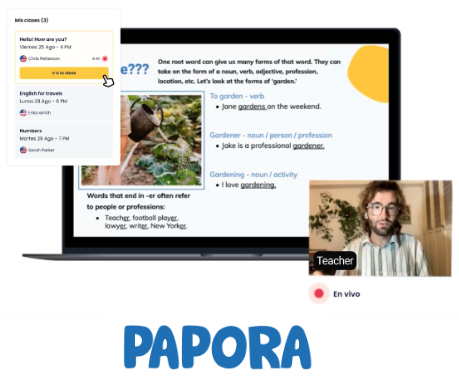


Main differences between British and American English

While both versions are correct, they differ in pronunciation, vocabulary, and usage. Here’s a quick comparison to help you understand the key distinctions at a glance.
| Feature | American English | British English |
|---|---|---|
| Pronunciation | Rhotic (the R is usually pronounced) | Non-rhotic (the R is often silent) |
| Vocabulary | store, elevator, apartment, restroom | shop, lift, flat, toilet |
| Common use | Global media, business, and the internet | The UK, local education, and formal contexts |
These differences may seem small at first, but they become much more noticeable as your level improves. Let’s take a closer look at how American and British English differ in pronunciation and vocabulary.
British vs. American pronunciation
One of the biggest differences between American and British English is how certain sounds are pronounced.
In American English, the letter R is usually pronounced clearly (car, hard), while in British English it is often softer or silent.
Another common difference is the T sound between vowels. In American English, it often sounds softer (water, better), while in British English it stays more distinct.
To hear these differences more clearly, watch the example below.
Pronunciation is just one part of the difference. Vocabulary also changes depending on whether you use American or British English.
Vocabulary
Some of the biggest differences between American and British English appear in everyday words you use all the time.
| Image | British English | American English |

|
Jam | Jelly |

|
Chips | French fries |

|
Shop | Store |

|
Chemist’s | Pharmacy / Drugstore |

|
Lift | Elevator |

|
Toilet | Restroom |
These differences can be confusing at first, especially when the same word means different things depending on the version of English.
That’s why it’s important to learn through real examples and practice in context, not just memorize vocabulary lists.
Stop getting confused by different English words
Learn how words are actually used in real conversations. With Papora, you practice English in context, so you don’t just memorize vocabulary - you understand it and use it naturally.
Practice English in real situations
Where is American and British English used?
American English is the most widely used version of English worldwide. It dominates global media, business, and the internet.
British English is mainly used in the UK and in some education systems, especially in Europe and former British territories.
In most international situations, American English is more common, but both versions are widely understood.
So which one should you learn?
Which English should you learn?
Both American and British English are correct. The best choice depends on your goals and where you plan to use the language.
American English
Pros:
- More common worldwide
- Dominates media, business, and the internet
- Easier access to learning materials
Cons:
- Less relevant if you plan to live or study in the UK
- May differ from formal or academic British standards
British English
Pros:
- Standard in the UK and many education systems
- Often used in exams and academic contexts
- Useful if you plan to live or study in the UK
Cons:
- Less common globally than American English
- Fewer resources in media and online content
For most learners, American English is the better choice, especially if your goal is to understand global content and communicate in everyday situations.
Additionally, you can use English learning platforms to improve your listening and get used to real speech. Want to make your nights count too? Explore English listening while sleeping.
In the end, what matters most is how often you practice and how confidently you can use English in real-life situations.
Learn American English with Papora
If you’ve decided to focus on American English, the next step is to start using it in real conversations.
Papora helps you work with English as it’s spoken every day. You practice speaking, listening, and reacting in situations that feel natural and familiar.
With Papora, you can:
- Speak regularly in small groups with expert teachers
- Learn through everyday situations and natural conversations
- Follow a clear path with 500+ lessons at your own pace
- Build confidence and communicate more comfortably over time
Over time, American English starts to feel more natural, and using it becomes easier in real situations.
Get used to real English faster
You already know which version of English makes the most sense for you. Now it’s time to start using it in real conversations and build confidence step by step.
Start practicing today
The most frequently asked questions about American vs British English
Both are correct, but American English is more practical for most learners because it’s used more widely in media, business, and everyday communication.
For many learners, yes. American English is often easier to understand because of its pronunciation and the amount of available content like movies, videos, and online resources.
The best way is to practice regularly in real situations. Platforms like Papora help you speak, listen, and react in everyday conversations, so you get used to how American English is actually used.