
If you're wondering how to learn English from home, the good news is that you don’t need a classroom to make real progress. With the right habits, tools, and study methods, you can improve your English from the comfort of your home.
Here are the main tips you’ll find in this guide:
- Create a study plan
- Divide your learning into key language skills
- Get the tools you need to study English
- Learn through activities you enjoy
- Build a positive and persistent mindset
- Listen to native speakers at home
- Try the Papora method
- Use the repetition method
- Practice the daily discovery method
- Create your own learning system
Let’s start with the first step to learn English from home more effectively.
Start Learning English Without Leaving Home
Papora helps you learn English from home with interactive lessons and unlimited live classes led by expert native-level teachers. Practice real conversations, follow a clear learning path, and improve your confidence step by step from anywhere.
Learn English from Home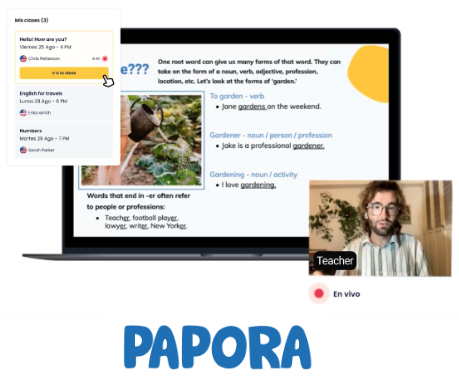


Tips for Learning English at Home
Learning English often requires time and money that not everyone has. That’s why many people look for ways to learn English from home using online tools and flexible study methods.
If you want to improve your English without leaving home, here are practical tips to help you get started.
1. Create a plan
If you're wondering how to learn English without leaving home, the first thing you need is an English study plan.
- Are you going to hire a private tutor?
- Have you decided to learn by watching TV series in English?
- Is your idea to learn English online?
2. Divide your skills into 4 areas
To learn English from home effectively, you need to work on different language skills, not just one. Focus on improving:
- Listening
- Grammar
- Vocabulary
- Speaking
If you only practice one area, your progress will be limited. For example, strong grammar won’t help much if you struggle to understand spoken English or feel nervous when speaking.
A balanced approach helps you improve faster and makes your learning more dynamic.
What you can do:
✅ Read books in English and listen to their audiobooks to practice vocabulary and listening.
✅ Talk with friends from English-speaking countries to practice conversation.
✅ Simulate conversations using AI tools.
✅ Listen to podcasts or read articles to get used to natural English.
3. Get the tools you need to study English
To learn English from home, you’ll need a few basic tools such as a computer, a stable internet connection, and access to online resources.
Many platforms, apps, and websites can help you practice English daily, and some of them are completely free.
What you can do:
✅ Take online English tests to check your level and track your progress.
✅ Watch TV series or videos in English to practice listening.
✅ Use apps or websites to practice vocabulary and grammar.
✅ Take live online classes with platforms like Papora to practice real conversations with expert native-level teachers.
4. Find something you enjoy doing
There are many ways to learn English online, but one of the most effective strategies is to study through topics and activities you genuinely enjoy. This helps you stay motivated and makes learning feel more natural.
What you can do:
✅ Watch movies or TV series in English.
✅ Read books, blogs, or articles about topics you like.
✅ Listen to music or podcasts in English.
✅ Change the language settings on your favorite apps or video games to English.
“My advice is simple: learn English through things you enjoy. If you like reading, try a book in English. If you play video games, change the language settings to English. If you enjoy movies or TV shows, watch them in their original language.”

5. Have a positive and persistent attitude

Learning English from home is not only about tools and study plans. Your mindset also plays an important role in staying consistent and making progress.
Focus on these key attitudes:
✅ Motivation - stay focused on your goal of improving your English.
✅ Commitment - follow your study plan and complete your practice regularly.
✅ Methodology - pay attention to which learning methods work best for you.
✅ Creativity - keep your study routine interesting so you stay motivated.
6. Listen and learn from native speakers at home
Podcasts, YouTube videos, and other online content are great ways to improve your English at home. They expose you to natural conversations and help you get used to how native speakers really speak.

What you can do:
✅ Listen to English podcasts during your daily routine.
✅ Watch YouTube videos or interviews with native speakers.
✅ Follow English creators who talk about topics you enjoy.
✅ Pay attention to pronunciation and common expressions.
“When learning English at home, motivation can be hard to maintain. One trick that helps is listening to a podcast in the background while studying.”

7. The Papora method
Papora is an online platform designed to help you learn English from home through interactive lessons and real conversations.
What you get with Papora:
✅ Unlimited live classes with expert native-level teachers
✅ A self-paced course with 500+ lessons available anytime
✅ English levels from A1 to C1 so you can progress step by step
✅ Interactive lessons based on real-life situations
Papora helps you practice English whenever it fits your routine - at home, after work, or during your free time.
Practice English from Home with Real Conversations
Papora helps you improve your English with unlimited live classes and a self-paced course with 500+ interactive lessons. Study from home, practice real conversations, and progress from A1 to C1 at your own pace.
Start Practicing English
8. The repetition method
Repetition is one of the most effective ways to improve your English vocabulary. It helps you remember words and phrases by practicing them regularly and gradually increasing difficulty.

What you can do:
✅ Start with a short list of vocabulary words or phrases.
✅ Read the first word, then cover it and repeat it from memory.
✅ Continue adding new words while repeating the previous ones.
✅ Repeat the full list several times to reinforce your memory.
9. The daily discovery method
The daily discovery method helps you improve your English by learning new words naturally in everyday situations.

What you can do:
✅ Learn a few new words every day.
✅ Add vocabulary practice to your daily routine.
✅ Look up words when you don’t know how to say something in English.
✅ Use everyday situations - like shopping or cooking - to discover new vocabulary.
10. Create your own system
There’s no single method that works for everyone when learning a language. The key is to find the strategies that fit your learning style and goals.
What you can do:
✅ Try different learning methods and see what works best for you.
✅ Combine several techniques, such as reading, listening, and speaking.
✅ Adjust your study routine if something isn’t working.
✅ Build a system that matches your interests and daily schedule.
“My main suggestion is to talk to yourself in English as much as possible. Describe what you’re doing out loud. This simple habit can quickly improve your fluency. You can also turn your hobbies into English practice. For example, if you enjoy cooking, watch cooking tutorials or shows in English.”

Remember to set your goal for English.

If you don’t define why you want to learn English, it will be much harder to stay motivated and make consistent progress.
Having a clear goal helps you choose the right lessons, courses, and exercises for your needs.
“It depends on what the student needs English for - daily communication, exams, or business. Your native language can also influence the mistakes you make when learning English.”

No matter your goal or learning style, the most important thing is to practice consistently and use methods that help you communicate in real situations.
If you want a structured way to apply these tips and practice English regularly from home, an online platform can help you stay on track.
Learn English with Papora
If you want to learn English from home in a structured and practical way, Papora offers a platform designed to help you practice consistently and improve your communication skills step by step.
With Papora, you get:
- Unlimited live classes with expert native-level teachers
- A self-paced course with 500+ interactive lessons available anytime
- English levels from A1 to C1 to guide your progress
- Interactive lessons based on real-life situations
- A flexible system that lets you study at your own pace from home
If you’re ready to turn these tips into real progress and practice English regularly, Papora can help you take the next step.
Start Learning English from Home Today
With Papora, practice English from home at your own pace with interactive lessons and unlimited live classes. Progress step by step from A1 to C1 while building confidence in real conversations.
Start Learning with Papora
Frequently asked questions about learning English from home
The best program depends on your learning goals and study style. Many online platforms offer interactive lessons and structured courses. For example, Papora provides unlimited live classes with expert native-level teachers and a self-paced course designed to help you practice English from home.
You can use free resources such as videos, podcasts, apps, and articles in English. These tools help you practice vocabulary, listening, and reading from home.