

Free English Level Test for Companies
The résumé says “advanced English.” The interview says otherwise. Papora gives you each candidate’s real CEFR level before the interview. It measures four skills separately, uses an adaptive algorithm, and delivers a clear result.
100% free, online, with no limit on candidates.
Recommended by:


Four Skills, One Real Level

Candidates Finish It in Minutes

Free for Your Company
HOW THE FREE
ENGLISH TEST WORKS
ADAPTIVE ALGORITHM
The Test Adapts to Each Candidate’s Level in Real Time
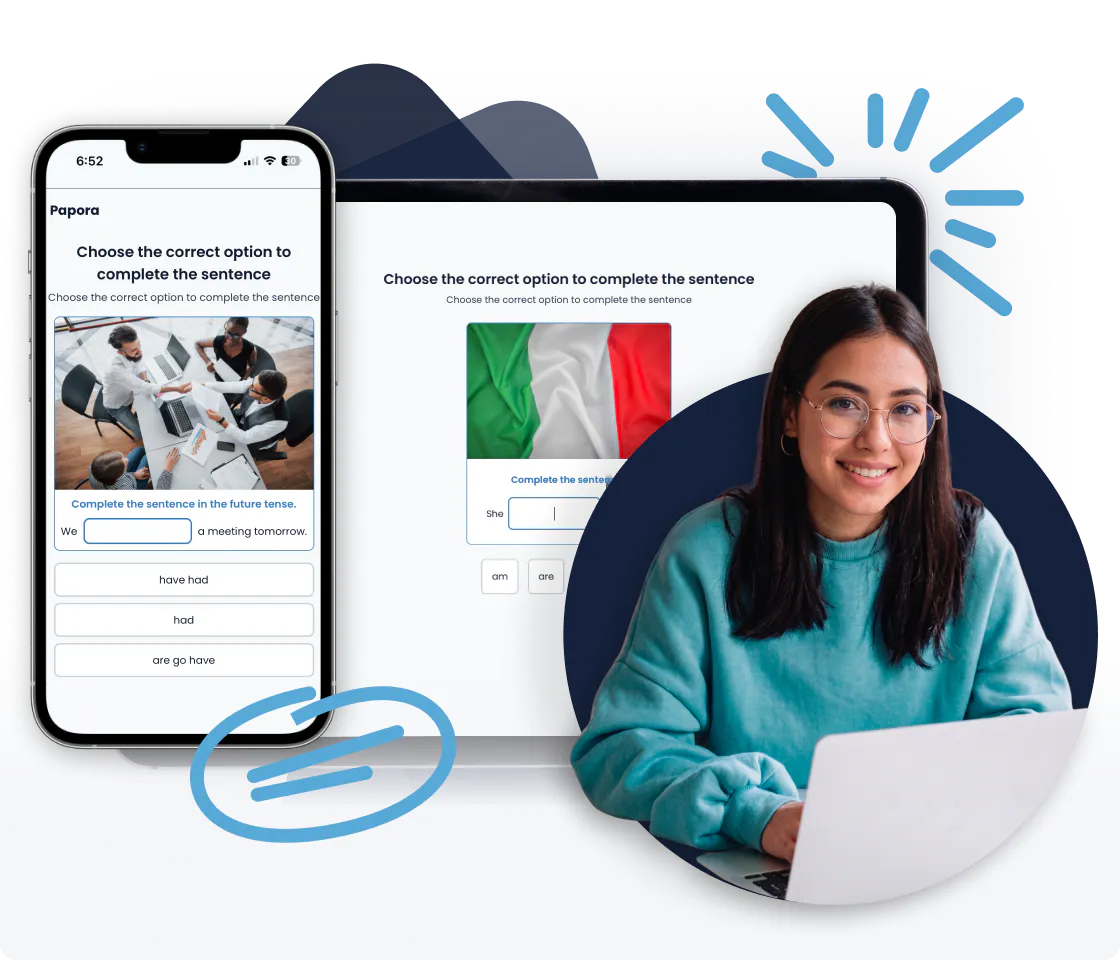
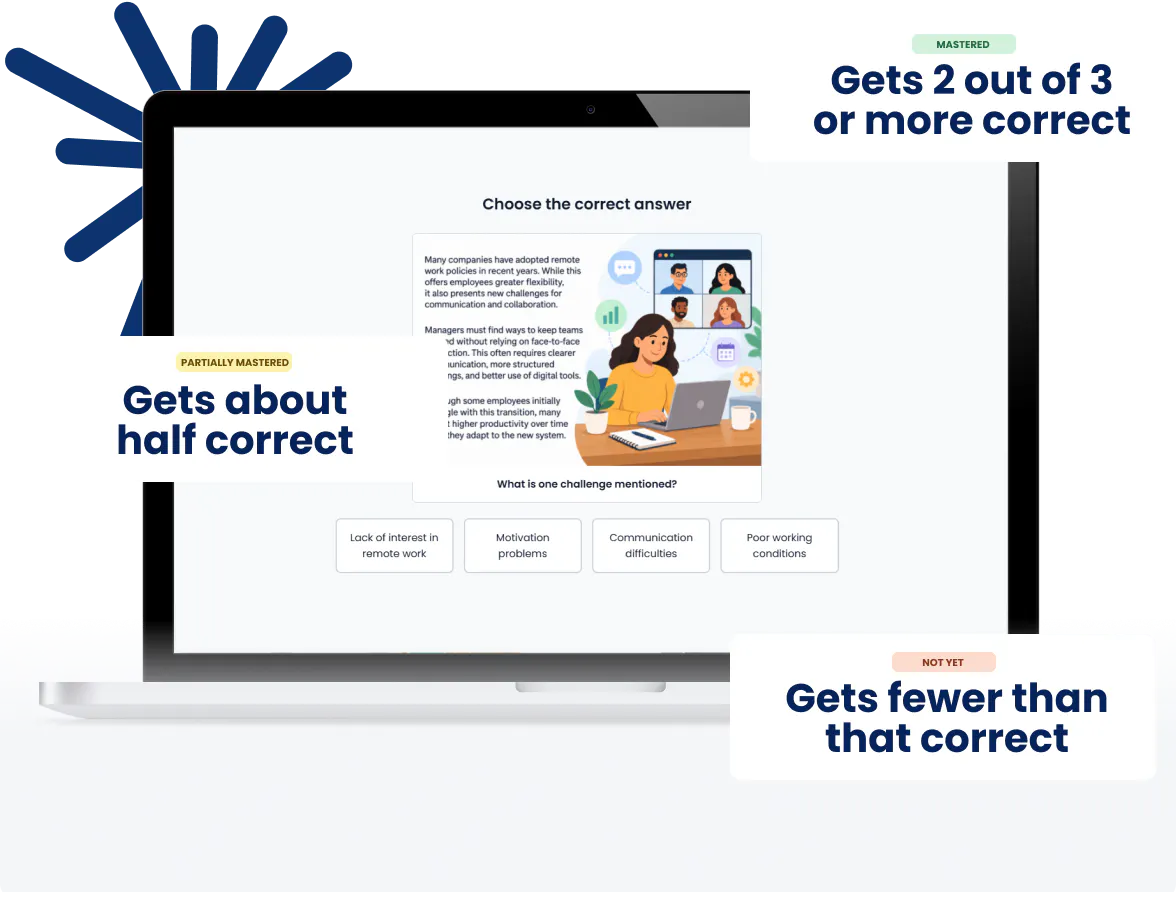
Not every candidate answers the same questions. The test starts at A1 and gets harder based on each candidate’s answers. If they get most of the questions right, they move up a level; if their results are low, the test ends at that level. That way, each person answers only the questions needed to determine their English level.
WEIGHT BY SKILL
Understanding Counts More Than Producing
The four skills don’t carry the same weight in the final result. Listening and reading make up 60% of the result, while vocabulary and grammar account for 40%. The system calculates the weighted average and rounds it to the nearest CEFR level, giving more weight to the skills that matter most at work.
ANTI-INFLATION RULES
Three Rules Keep the Level From Being Inflated
The system applies three rules so the final level isn’t higher than the candidate’s skills show: it caps the result based on their listening and reading level, sets a maximum of B1 if listening is at A1 or A2, and only assigns C1 if they reach that level in listening or reading. That way, the result better reflects the candidate’s ability to understand and use English in real situations.
Make Hiring More Objective
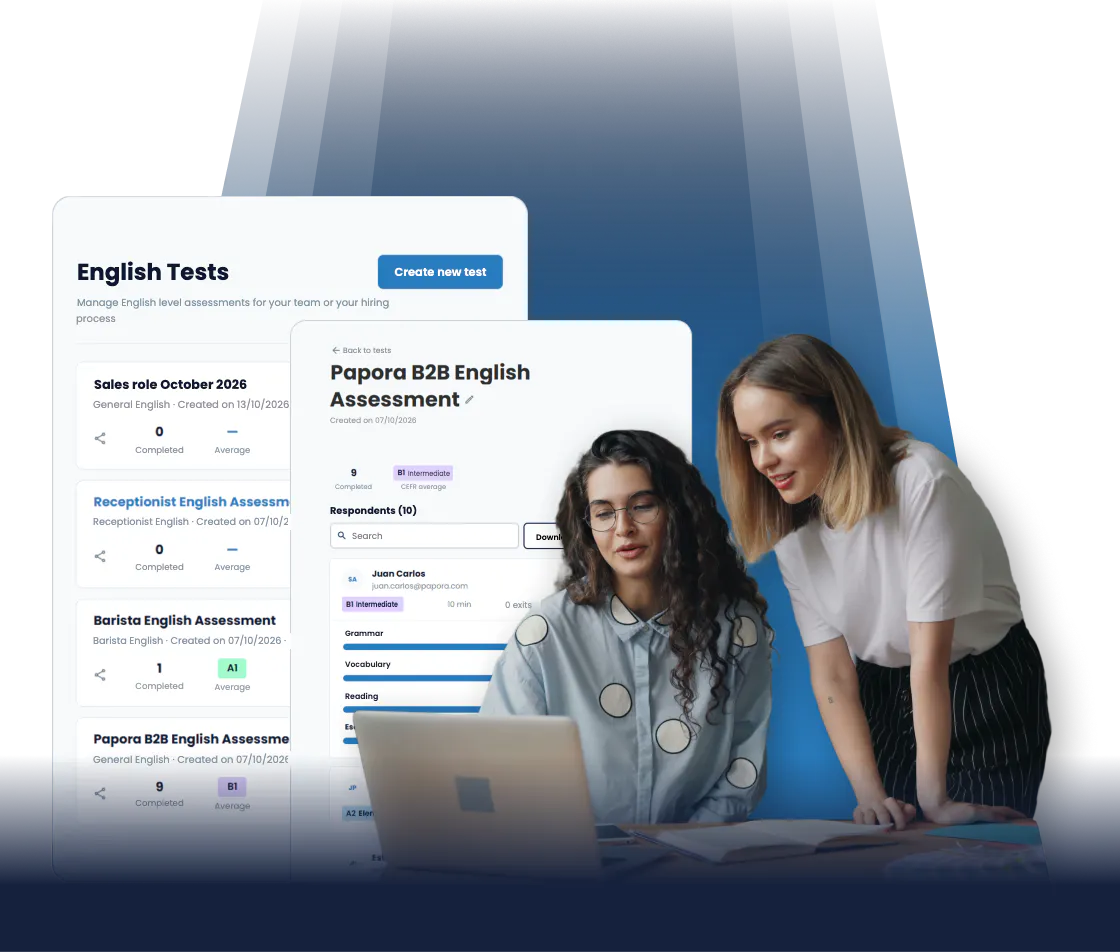
When English is a job requirement, a ten-minute interview isn’t enough to know whether someone is really at the level you need. Papora’s test delivers a result based on the Common European Framework of Reference (CEFR) that you can add to the candidate’s file. You no longer have to rely on the interviewer’s impression or what the résumé says. You get concrete data to compare candidates and back up your decision with more than gut feeling.
-
Measurable English level
-
Objective comparison
-
Well-informed decisions
Decide Whether to Hire or Train With Papora
Many companies assume someone speaks English until that person has to speak in a meeting with an international client. The test gives you their real level before that happens. With that information, you can decide whether it makes sense to train someone already on your team or whether the role needs someone who already has the level.
-
Identify English gaps
-
Spot training needs
-
Hire with better judgment
What Companies Usually Ask Before Trying It
COMMON QUESTIONS
STRAIGHT ANSWERS
Frequently asked questions
These are some of the questions companies frequently ask us.
Yes. You can create English tests from your Papora dashboard and share them with candidates or employees without paying per assessment or signing up for a training plan. You can reuse the link to assess as many people as you need.
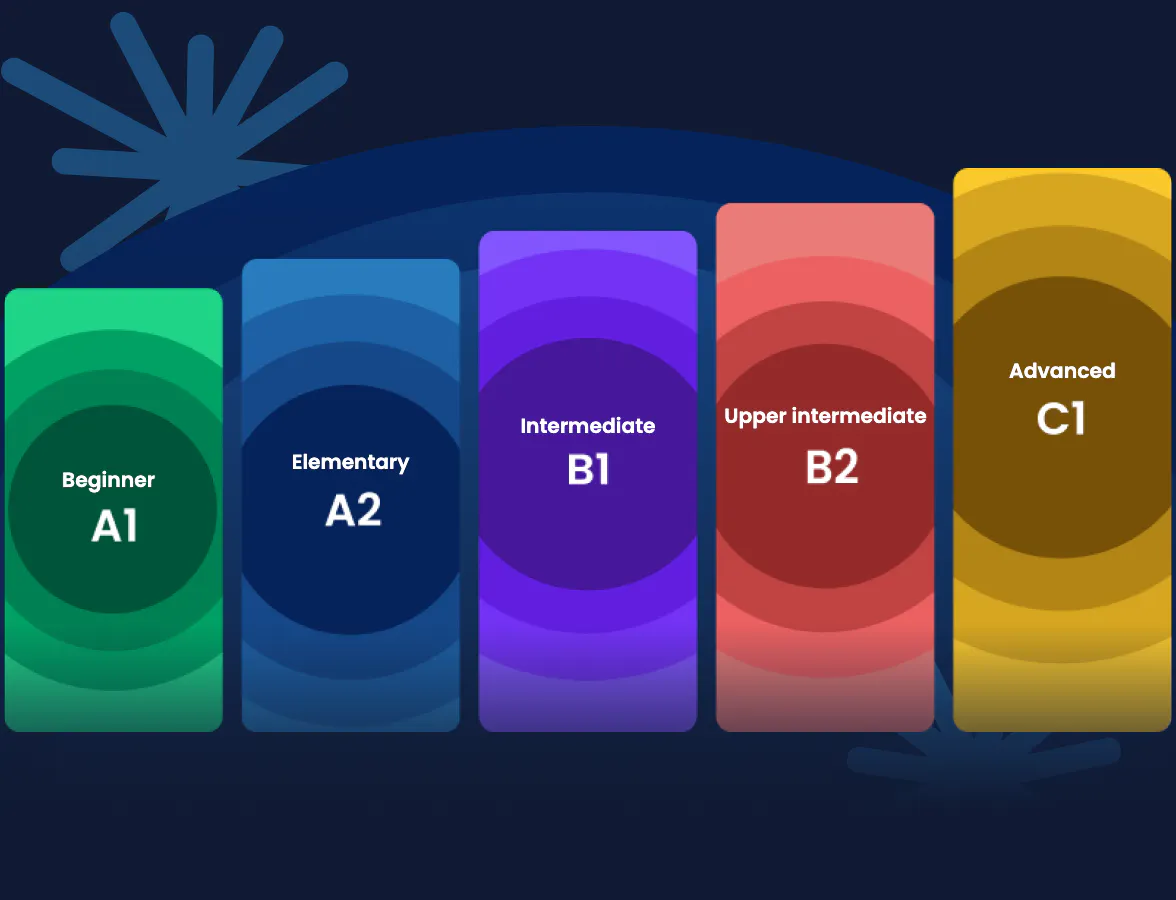
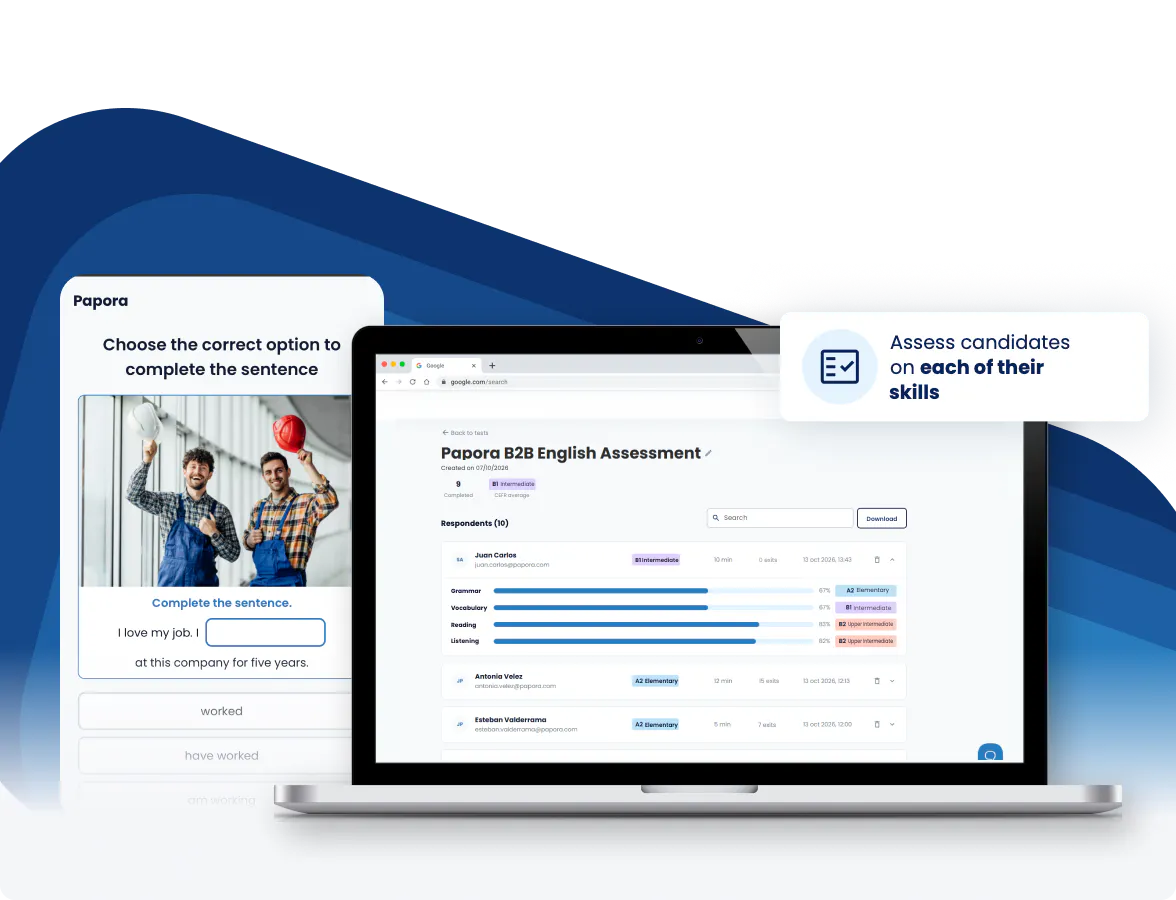
The test assesses four skills: grammar, vocabulary, reading, and listening. When it’s done, you get an estimate of the candidate’s English level according to the Common European Framework of Reference for Languages (CEFR), from A1 to C1, along with their results for each skill.
The test uses an adaptive algorithm that adjusts the difficulty of the questions based on the candidate’s answers. The result gives you an estimate of their English level and lets you compare candidates using objective criteria. It doesn’t replace an official certification or a specialized assessment when the role requires advanced English.
The test is designed to assess English level quickly, without having to coordinate schedules or set up additional interviews. Candidates answer the questions in less than 30 minutes, and you get the result as soon as they finish.
Yes. You can assess both candidates during a hiring process and employees who are already part of your team. The results help you identify English gaps, spot training needs, and make decisions about your team’s development.
The results appear on your dashboard as soon as the candidate finishes the test. You can check their estimated CEFR level and review their performance in grammar, vocabulary, reading, and listening to compare profiles and make informed decisions.
No. You just need to create a free Papora account to access the test and assess your candidates or employees, without signing up for a training plan.

