
Many companies want to reach English-speaking markets, work better with international clients and train their teams, but they get stuck at the same point: they don't know where to start. Or worse, they choose programs that don't deliver real results because they lack measurement, support and a method people actually want to follow.
The good news is that you don't need to spend a fortune or hire an outside consultancy to make this work. What you do need is a sustainable plan and a few clear first steps.
But first, here are three things that separate the companies that succeed from the ones that keep trying and failing:
- English is a must-have in a global economy.
- The problem is rarely the team's willingness. It's the lack of a method that's motivating, ongoing and connected to real work.
- There are concrete, accessible steps any company can start implementing today.
At the end of this article, our experts compare the options on the market and explain the best way to put all of this into practice without the hassle.
Do you really know your team's English level?
Most companies make decisions about their employees' English based on résumés or self-assessments. Papora gives you real, personalized data.
Create a free account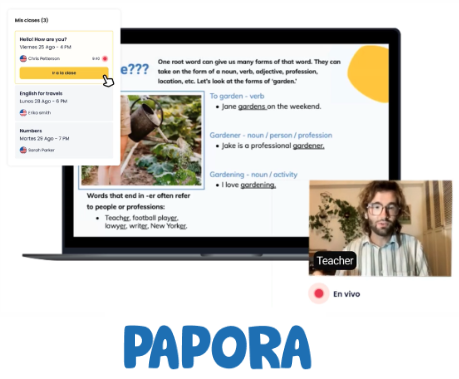


Ways to Improve English at Your Company
1. Assess your team's current level before you start
No diagnosis, no plan. One of the most common mistakes when bringing English learning into a company is assuming everyone starts from the same place. Or worse, launching a generic program that neither motivates advanced learners nor supports beginners.
Before taking any step toward English training at your company, give every employee a level test. This lets you group teams by level, personalize content and measure progress accurately.
2. Switch your company's devices and tools to English
It's one of the simplest changes your company can make, and one of the most effective: set English as the default language on computers, company phones, management platforms and the team's digital tools.
Daily exposure to the language, even passive exposure, trains the brain to get familiar with English vocabulary, structures and technical terms. Over time, what once caused friction becomes natural.
3. Hold an English-only meeting every two weeks
Setting aside a fixed slot every two weeks where the only rule is to speak English has a transformative effect on the team. It doesn't matter if it's uncomfortable at first, if there are mistakes or if sentences come out slowly. That's exactly the point.
Practice in a real context is what turns theoretical knowledge into real skill. For it to work, the environment has to feel safe and motivating: publicly recognize those who participate most, reward consistency and celebrate progress.
Stop investing in English without knowing if it's working
Papora includes a dashboard with individual reports, level progression and real-time metrics so you can justify every dollar spent on training.
Create a free account
4. Start an English book club
A monthly book club with books, articles or newsletters in English related to your industry is an effective way to learn the language. Not generic English: industry English, with the vocabulary, topics and debates your team already knows in Spanish.
The format is flexible: in person, virtual or hybrid. What matters is having space for discussion where employees practice expressing ideas, arguing positions and asking questions in English. Combined with relevant reading, this speeds up learning in an organic, sustained way.
5. Build English into everyday work tasks
The most effective English learning doesn't happen in a classroom separate from real work. It happens within the work itself.
- Writing emails in English
- Documenting processes in English
- Preparing bilingual presentations
- Summarizing meetings in English
These exercises don't require extra time, just an intentional decision to bring the language into the daily routine.
Final Tip: Find a program that fits your company's pace, with ongoing support
The five steps above work. But the results really show when your team has access to a solid English platform that supports them along the way, has no expiration date and is designed for the real working world.
Papora: the platform that makes all 5 steps possible
Papora for Business isn't a six-month crash course with a certificate at the end. It's a live, ongoing service that brings English into real life and the specific context of work: meetings, negotiations, presentations, emails and calls.
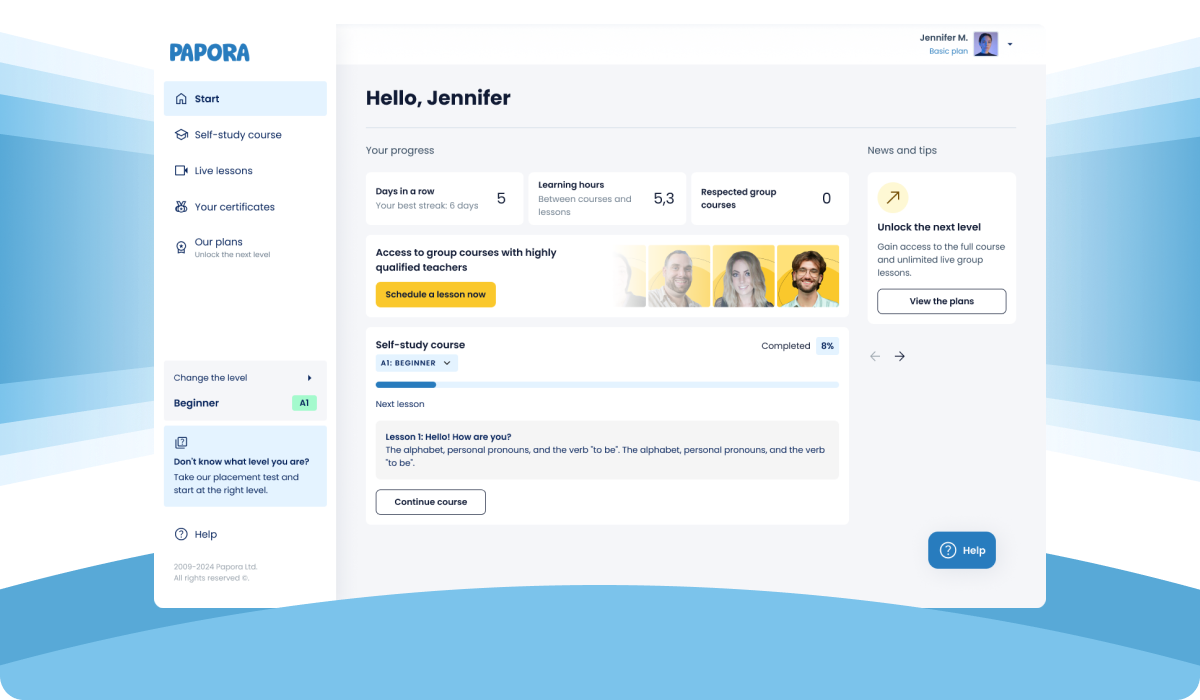
It doesn't end or expire. Employees learn continuously with new lessons and practice, live classes with instant feedback and a self-guided course from A1 to C1. English is built as a habit, not a one-off task.
500+ lessons with examples and audio, so each employee can progress at their own pace without losing the thread.
From 4 live classes a month included, with real instructors who give live feedback and support the team's progress week after week.
Pricing from $19 USD per employee per month, with full access to all lessons. Designed so small and midsize companies can train their teams without budget standing in the way of international growth.
Your team's English could be holding back your company's growth
Barriers with international clients, meetings that don't flow, missed opportunities. Papora combines assessment and training in one platform.
Create a free account
Frequently Asked Questions About Improving English at Your Company
Make it part of the routine, not an extra task. An English-only meeting every two weeks, a Slack channel where people only write in English or publicly recognizing those who progress most are simple ways to build the culture without pressure.
That's the most common situation, and it's not a problem if you choose a well-designed English program. The key is to start with an individual level assessment and assign different learning paths. Platforms like Papora let each employee progress from their own starting point without the advanced group holding back beginners.
Free resources and internal tips help, but they rarely produce sustained progress because they lack structure, follow-up and support. A well-designed paid program, like Papora from $19 USD per employee per month, offers a clear path, live classes and progress metrics. The difference shows in the medium-term results.